

Embrace Your Shield.
Re:act Seatbelt Campaign
The Re:act road safety behavior change program is a unique collaboration between industry, government, higher education institutions and students that gives young people the opportunity to develop a peer-to-peer campaign that positively influences their peers and the community they live in.
Goal: This year's goal is to create a campaign with a positive message that educates 17-25 year olds to raise awareness of wearing seatbelts and wearing them correctly, as a driver or passenger, and ensuring their future behaviors are safe.
Research
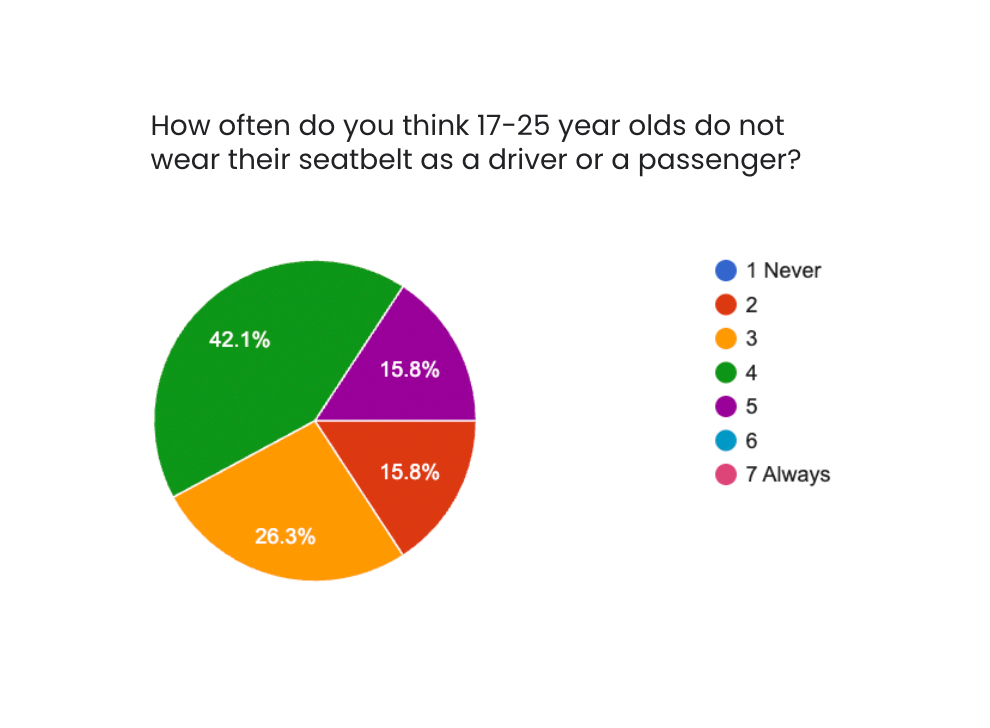
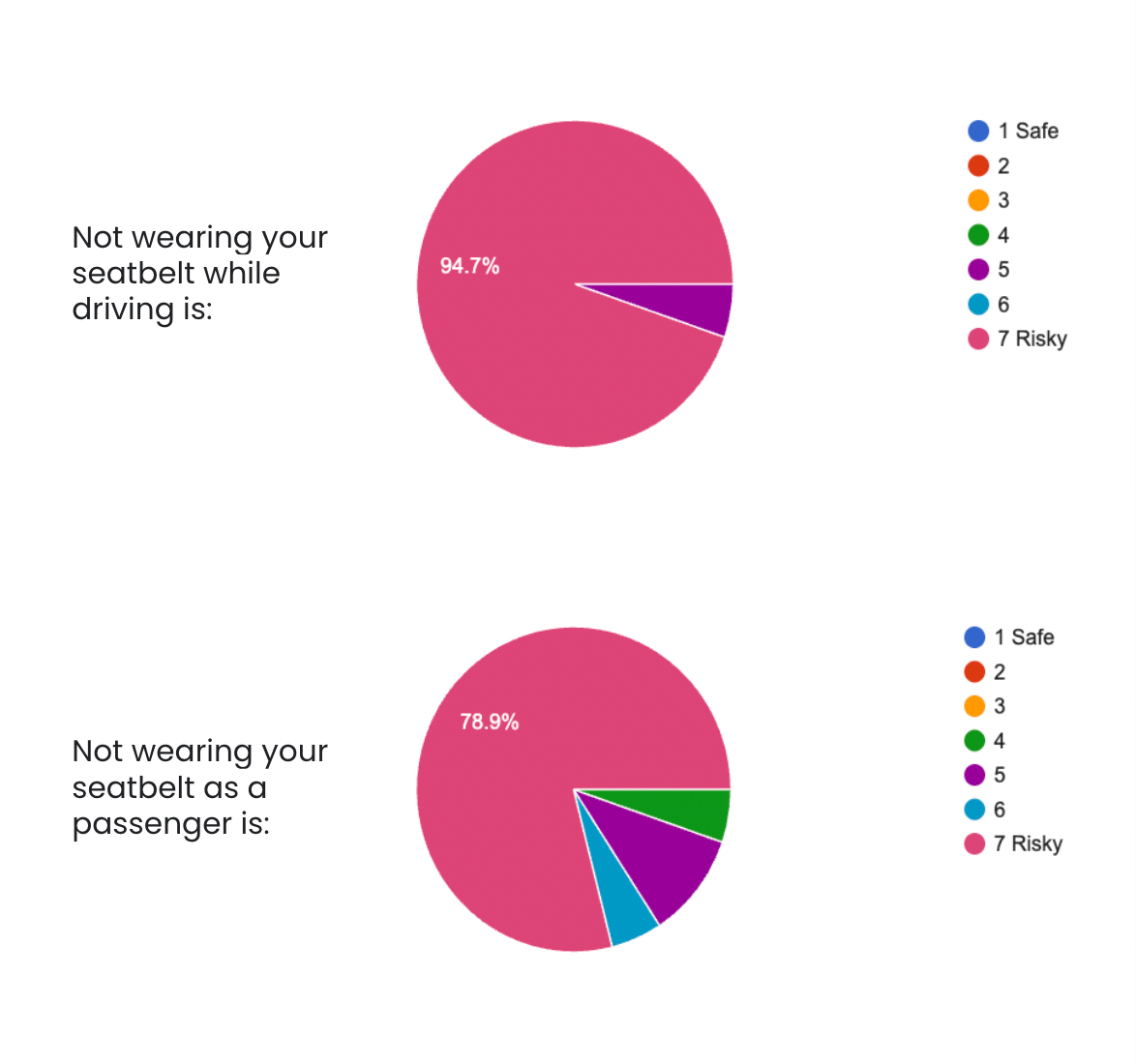
A survey was conducted for this project, requiring a minimum of 20 survey respondents to ages 17-25, answering Re:act survey questions on opinions of seatbelt safety. Survey responses indicate a common misconception—many participants view not wearing a seatbelt as less risky when riding as a passenger compared to driving, highlighting a gap in risk awareness.
Initial Ideas
Billboard Drafts
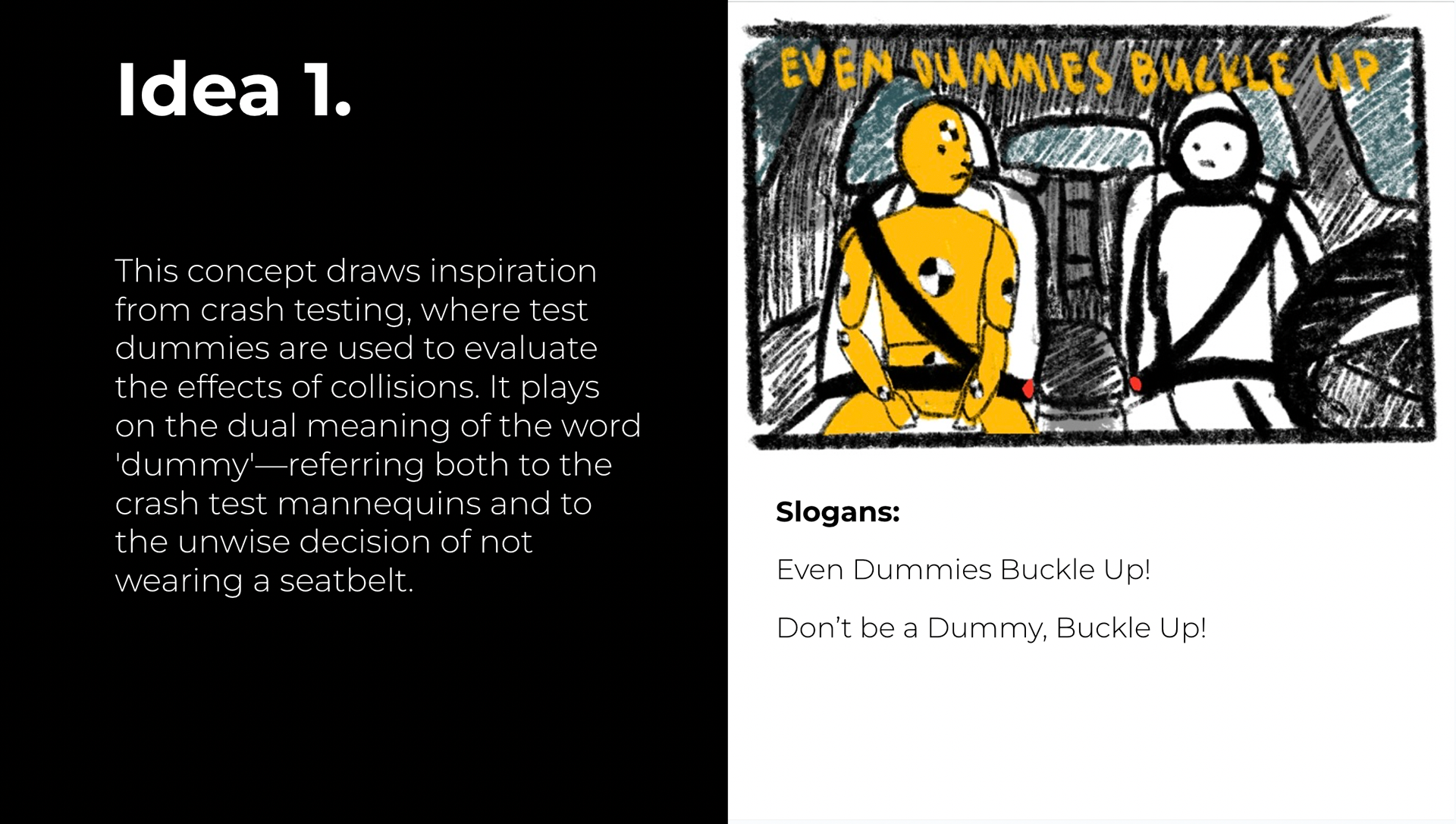
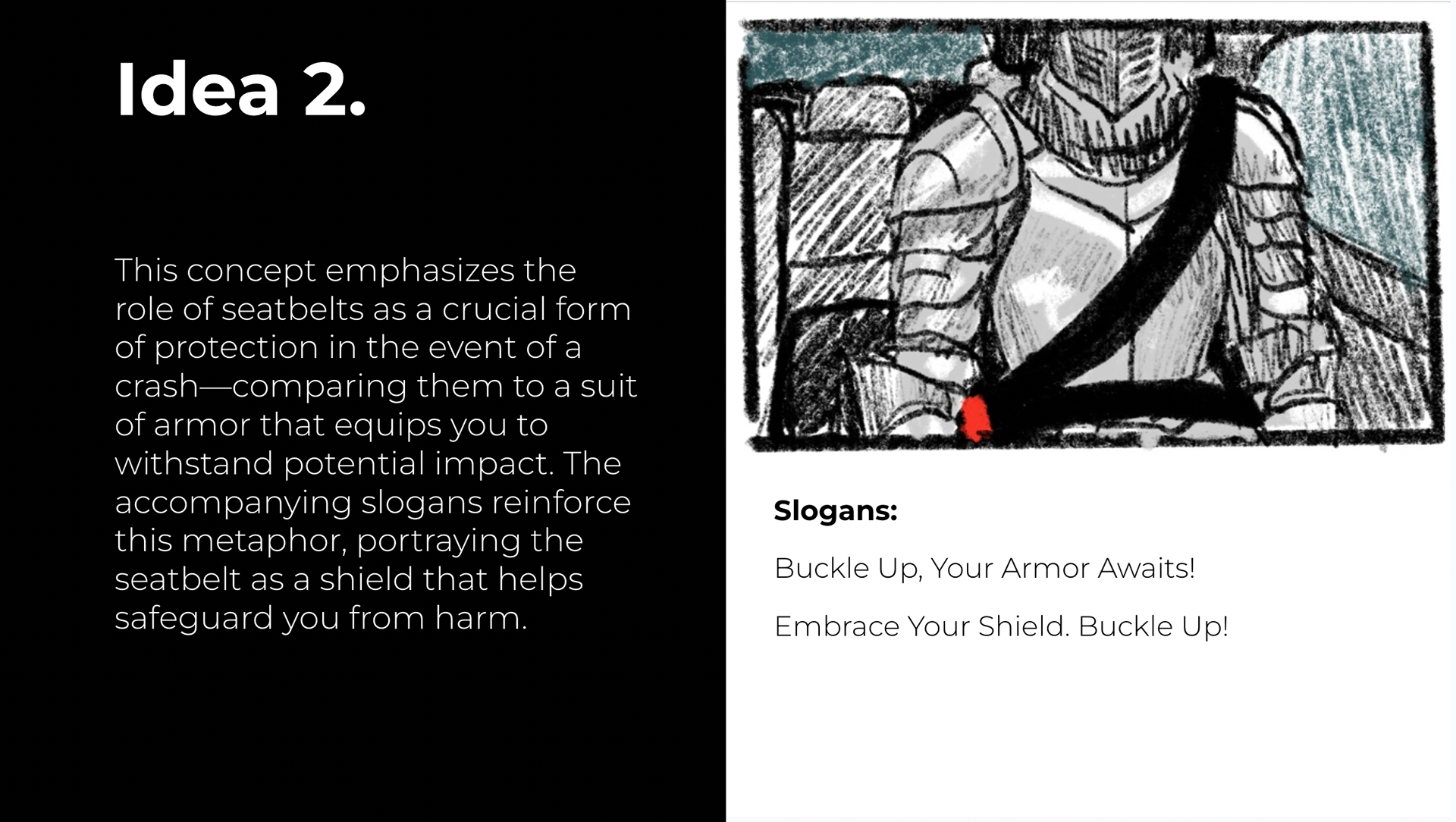
For each billboard draft, I took a photorealistic approach, using Adobe Firefly to generate images based on my sketches. After selecting the most suitable image, I refined it further in Photoshop. I then finalized the billboard design in Illustrator, working within the provided sizing template.


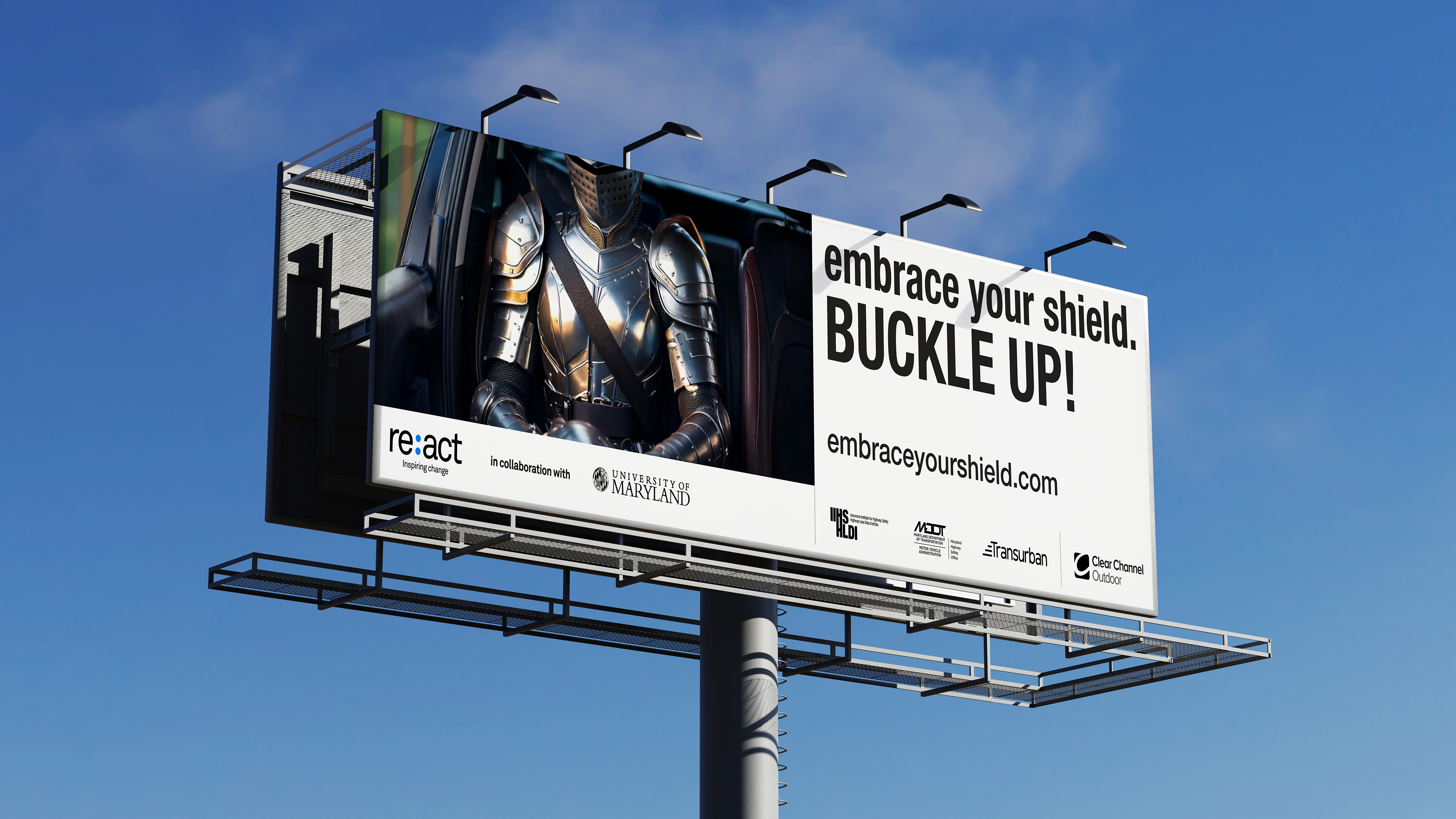
Final Billboard Design
After receiving feedback, I decided to move forward with the Embrace Your Shield campaign. I made some minor refinements to the final design, such as mirroring the image to better address passengers and incorporating the potential website URL.

Campaign Landing Page
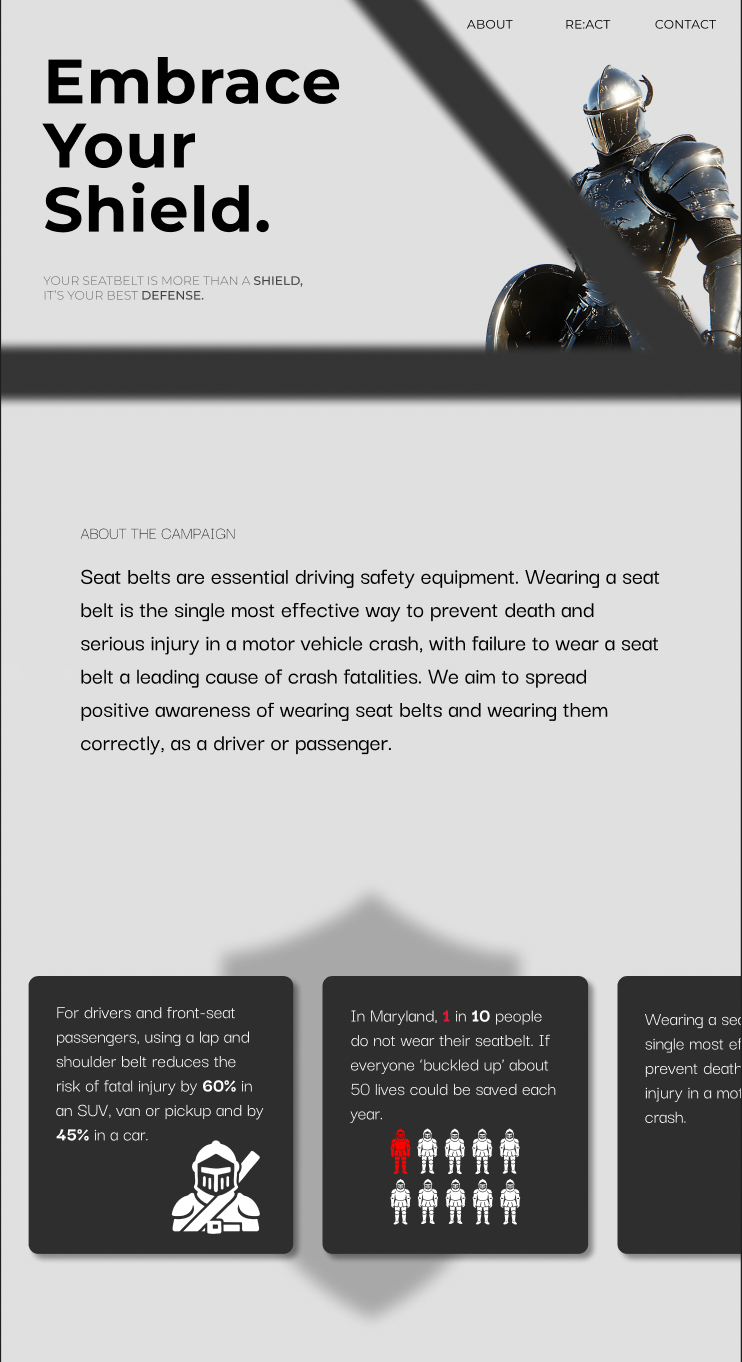
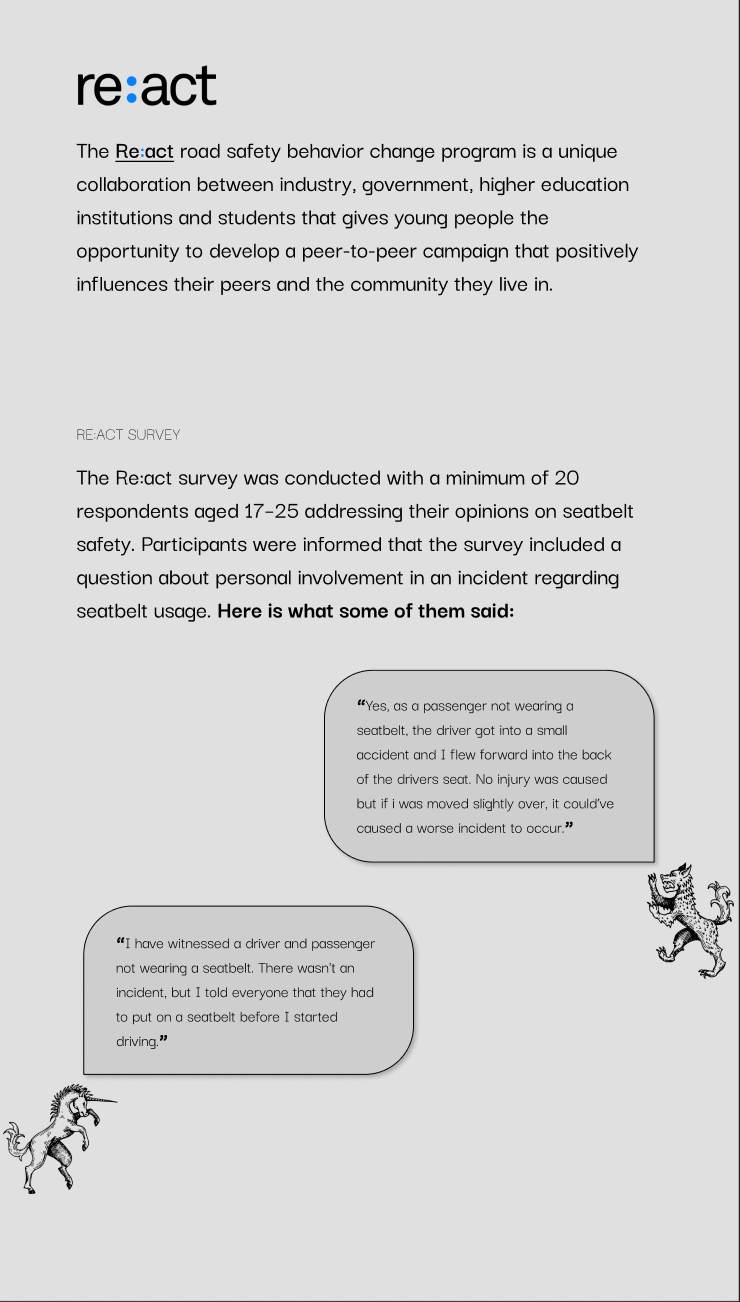
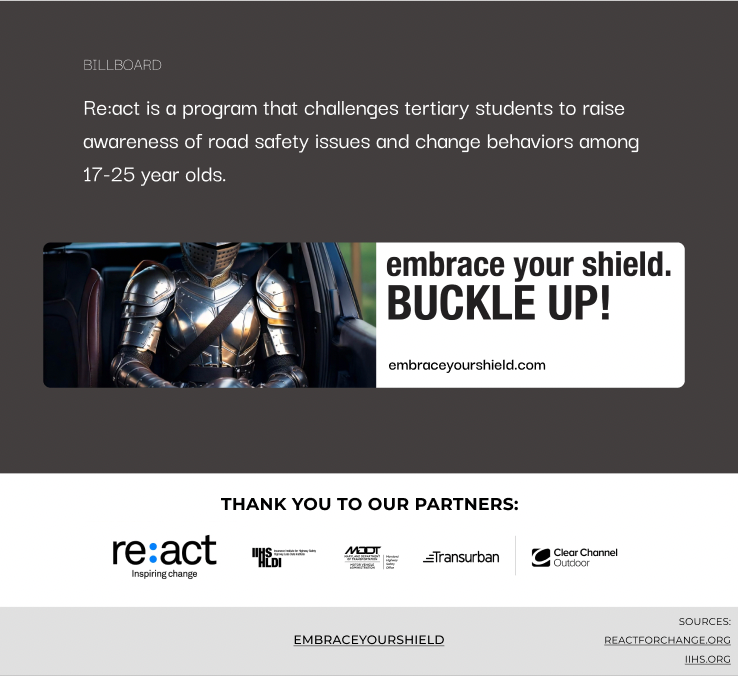
The second part of the project focused on designing a landing page for our unique seatbelt campaign, using Figma to creatively present our visuals and theme.
Draft
Feedback
My initial Figma designs featured a dark, monochromatic palette that gave the webpage a modern feel. However, this contrasted too strongly with the medieval reference of the campaign, so I refined the design to create a better balance between old and modern styles. I lightened the overall color scheme and incorporated medieval elements, such as scrolls and textured details, to add warmth and visual interest. These adjustments helped unify the design, blending modern and historical influences into a more cohesive and engaging experience.